




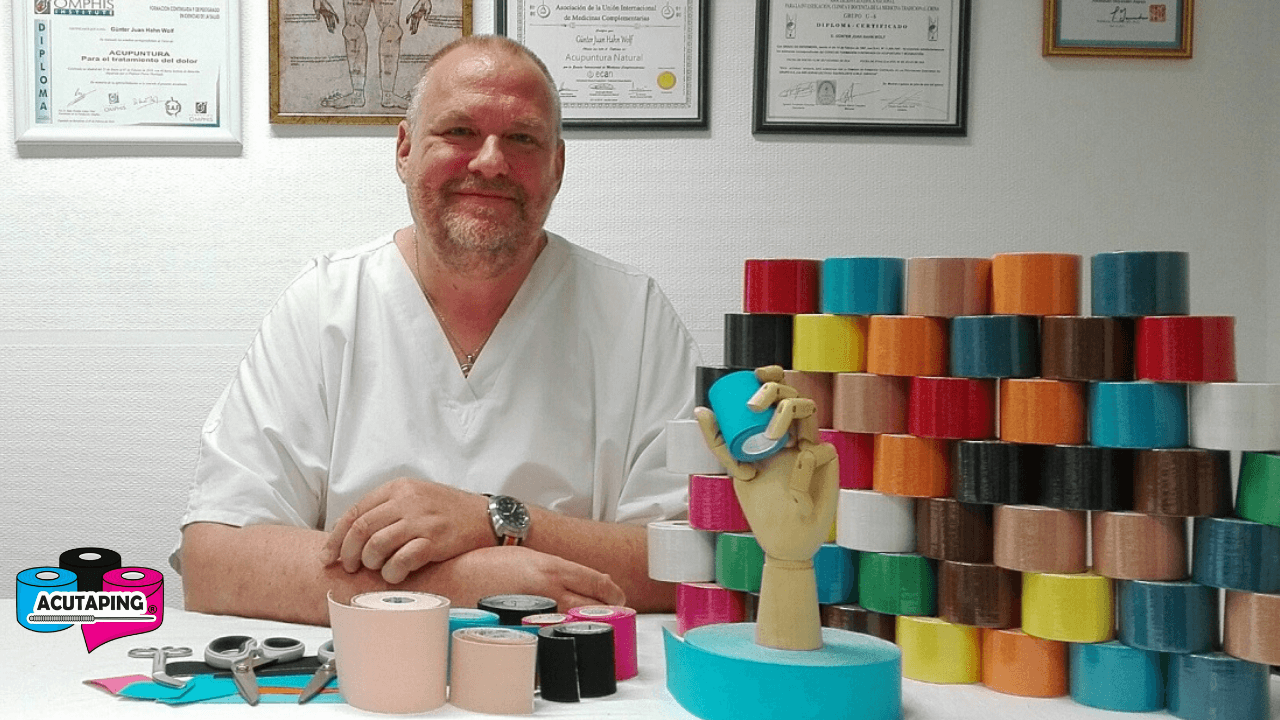
08 Jul What is acutaping? The whole is more than the sum of its parts
By Juan Hahn
Western society, formed by Cartesian ideas, considers the world, and therefore the human being, as a big machine whose parts can be studied and treated separately. However, for thousands of years, Eastern thought (and in recent years, quantum physicists) teaches us that everything is interconnected. Acutaping, with the utmost respect for hyper-specialization, takes this perspective.
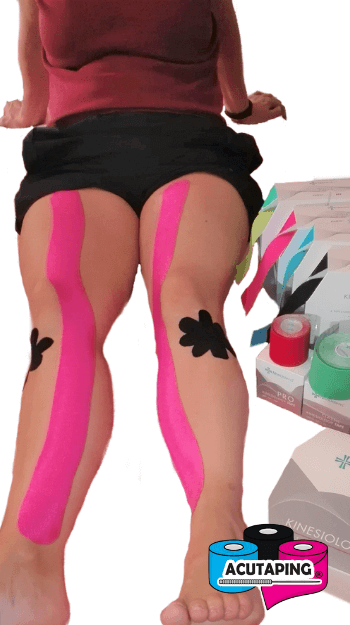
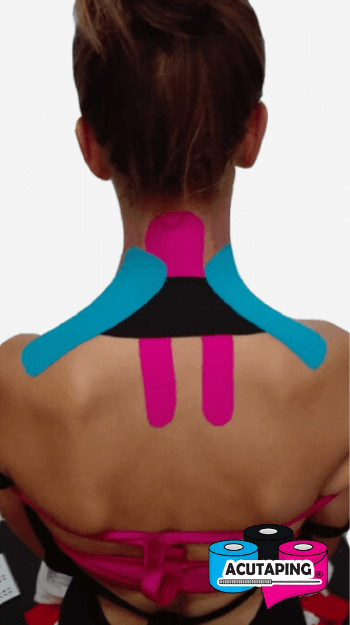
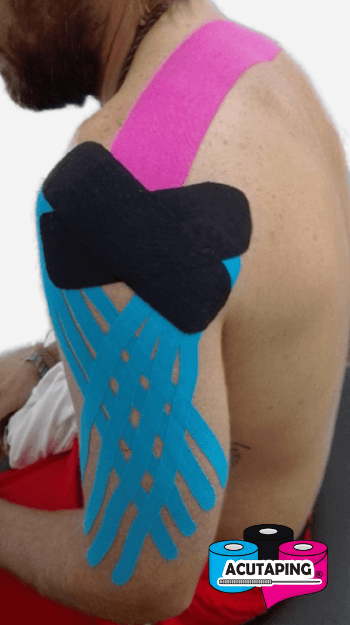
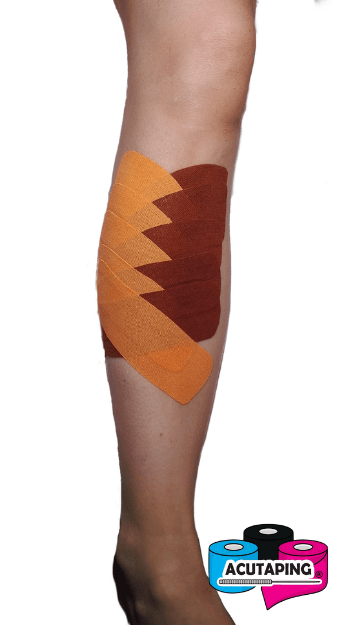
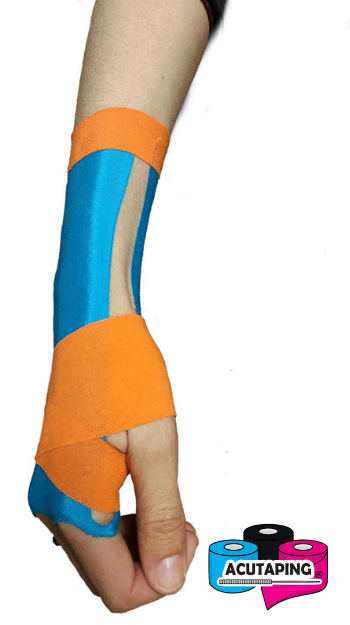
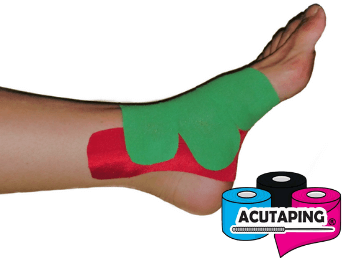
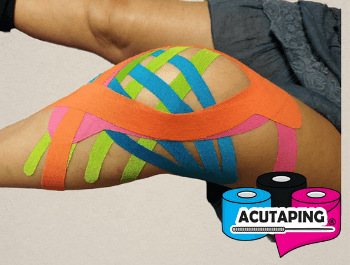
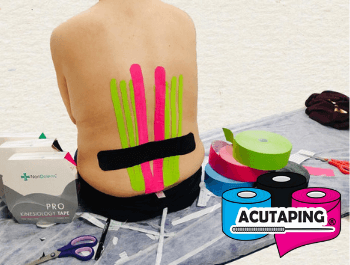
Acutaping is a registered natural therapeutic technique in constant evolution. In addition to conventional taping techniques, it incorporates neuromuscular taping, cross or inelastic mesh taping, and spiral taping on acupuncture points, meridians, and trigger points.
-
- ® Juan Hahn
-
- ® Juan Hahn
-
- ® Juan Hahn
Acutaping was born from the studies of Dr. Kenso Kase (acupuncturist and chiropractor) and Dr. Nobutaka Tanaka (acupuncturist and osteopath). This technique fuses anatomical, physiological, biomechanical, biochemical, and biophysical concepts.
Acupuncture can affect the musculoskeletal system, the cardiovascular system, the lymphatic system, the nervous system, and of course the fascial system. Biotensegrity is very important in the process of acutaping. Acutaping can also affect internal organs through somatovisceral and viscerosomatic relationships. In short, acutaping can affect and influence anything that acupuncture does. It is not surprising, therefore, that the pioneers of this concept in the 70s were Eastern acupuncturists.
-
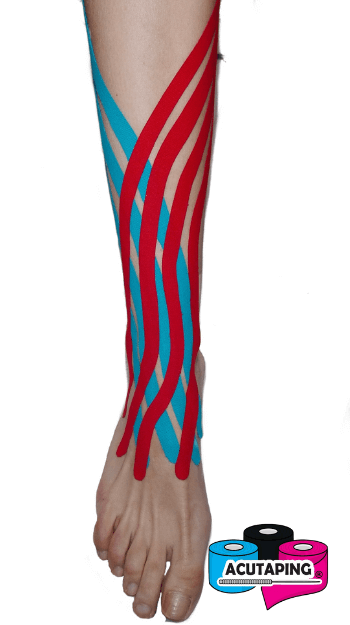
- ® Juan Hahn
-
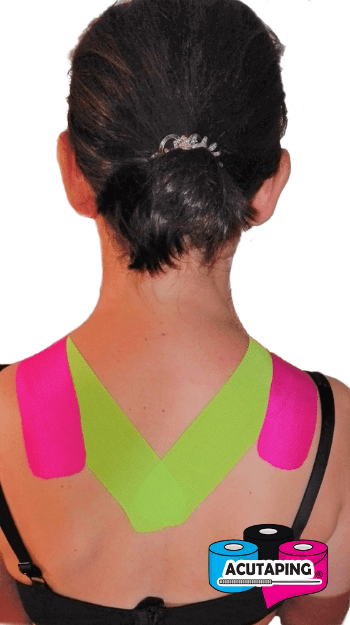
- ® Juan Hahn
-
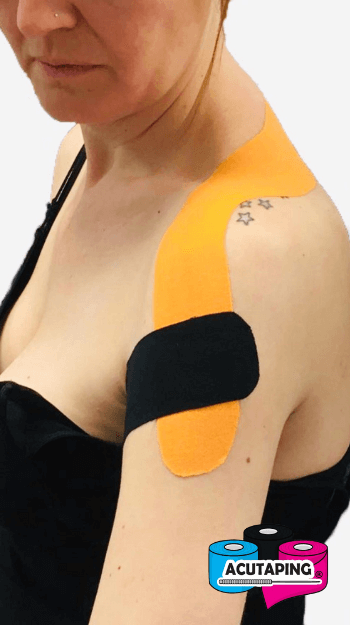
- ® Juan Hahn
Acutaping is not limited to muscular use, although it is most commonly used in this way. For example, we saw many athletes in the London and Beijing Olympic Games using acutaping. World-class soccer players, tennis players, etc. also rely on this technique, which receives the corresponding media attention.
The primary acutaping techniques are: muscular, fascial, articular, space augmentation, MTP (myofascial trigger points), TCM (taping on acupuncture points and meridians), ligament/tendon, lymphatic, neuroreflex, and mechanical correction. More than one technique can be applied at a time. Often, for example, a muscular technique is combined with an acupuncture point or space augmentation technique. In addition, acutaping is compatible with other therapies and other types of bandages, such as functional or compressive bandages.
Acutaping is very effective in reducing pain thanks to its “decompressing” effect on nociceptors, its ability to release endorphins, and the fact that it activates the Gate Control Theory (Melzack and Wall).
-
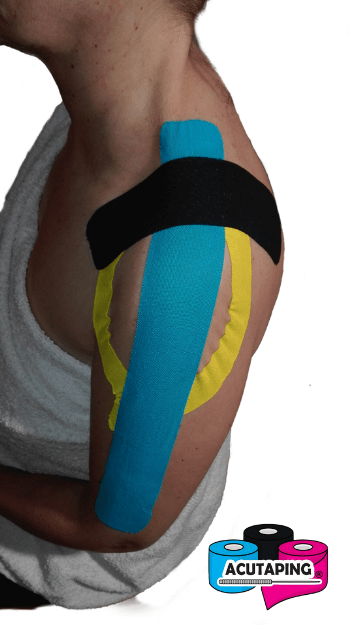
- ® Juan Hahn
-
- ® Juan Hahn
-
- ® Juan Hahn
Acutaping´s effects are subtle and consistent, “working” 24 hours a day as a low intensity and long duration stimulus. It is not meant to immobilize, as the goal to help the body´s self-healing process by facilitating the tissue perfusion and toxin elimination. Acutaping modifies the inputs sent to the Central Nervous System through mechanoreceptors, proprioceptors, nociceptors, etc. Essentially, efferent signals are changed through the modification of afferent signals. By stimulating the skin, we can access, through medullary segments, the organs, bones, connective tissue, joints, vascular system, lymphatic system, and nervous system (viscerotomes, sclerotomes and angiotomes).
Acutaping is being used more and more frequently to treat neurological sequelae, such as those that occur after suffering a stroke. Acutaping has neuromodulatory effects, meaning it can be used to treat gait disorders in children and adults, help stabilize joints, improve the function of ligaments and tendons without limiting mobility, eliminate scars, improve lymphatic and blood drainage, also treat disorders such as diarrhea, constipation, dysmenorrhea and much more.
In any case, acutaping is a complementary therapy, which can never replace any medical, pharmacological, or surgical diagnosis and treatment.
The possible applications of acutaping are numerous, and there are many more to discover. It is non-invasive, inexpensive, and leads to minimal or nonexistent side effects. It is compatible with any other therapy. But like all therapies, it requires training, practice, study, and research.
-
- ® Juan Hahn
-
- ® Juan Hahn
-
- ® Juan Hahn
Sorry, the comment form is closed at this time.