

14 Jun Introduction to scalp acupunture
By Juan Hahn
Scalp acupuncture is a specialty within acupuncture that focuses on stimulating specific points on the scalp to treat various diseases and imbalances.
Over the years, several specialists have developed unique approaches in this field, including prominent doctors such as Yamamoto, Jiao Shunfa, Ming Qing Zhu, Fang Yunpeng, and Lin Xue-Jian. In this article, we will explore their contributions and learn how to combine these techniques to provide patients with the best clinical results.
Taken together, these techniques have synergies that form what we know now as “Neurofunctional Scalp Acupuncture.”

History of Scalp Acupuncture
The history of scalp acupuncture is fascinating and spans as many centuries of development and evolution as the history of acupuncture itself. Although its exact origins are unclear, the practice of stimulating points to treat diseases seems to date back to ancient China, with some roots in other Asian countries. Over the years, scalp acupuncture techniques have been refined and adapted by different cultures and therapeutic traditions.
In the mid-20th century, modern scalp acupuncture in China went through significant development. Doctors such as Dr. Jiao Shunfa and Dr. Ming Qing Zhu made particularly important contributions to this field: they developed new scalp acupuncture systems that were more effective for treating patients.
Soon after, other techniques of scalp acupuncture emerged, such as those developed by Dr. Yamamoto, Dr. Lin, and others.
All methods have contributed greatly to the field of scalp acupuncture with unique characteristics, philosophies, dialectics, and approaches. Due to the effectiveness of scalp acupuncture techniques in treating many types of diseases well beyond the neurological and musculoskeletal, it has expanded worldwide and as a prime area of interest and development in integrative medicine in numerous countries.
Scalp Acupuncture Techniques
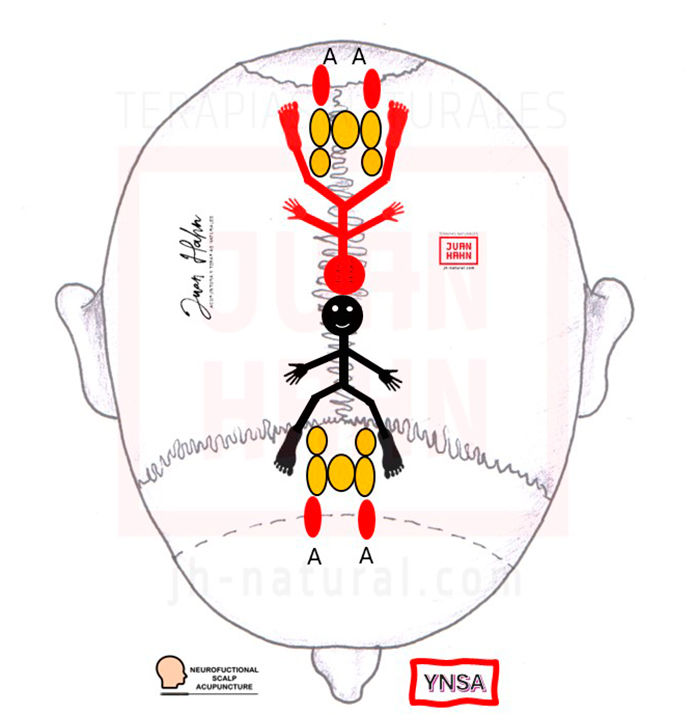
Yamamoto New Scalp Acupuncture (YNSA)
Yamamoto New Scalp Acupuncture (YNSA) was developed by Japanese physician Toshikatsu Yamamoto in the 1960s. He first presented it to the world in 1973 at the Ryodoraku Congress in Osaka. Over the next 50 years and still today, Dr. Yamamoto has never stopped working to improve and complete the system.
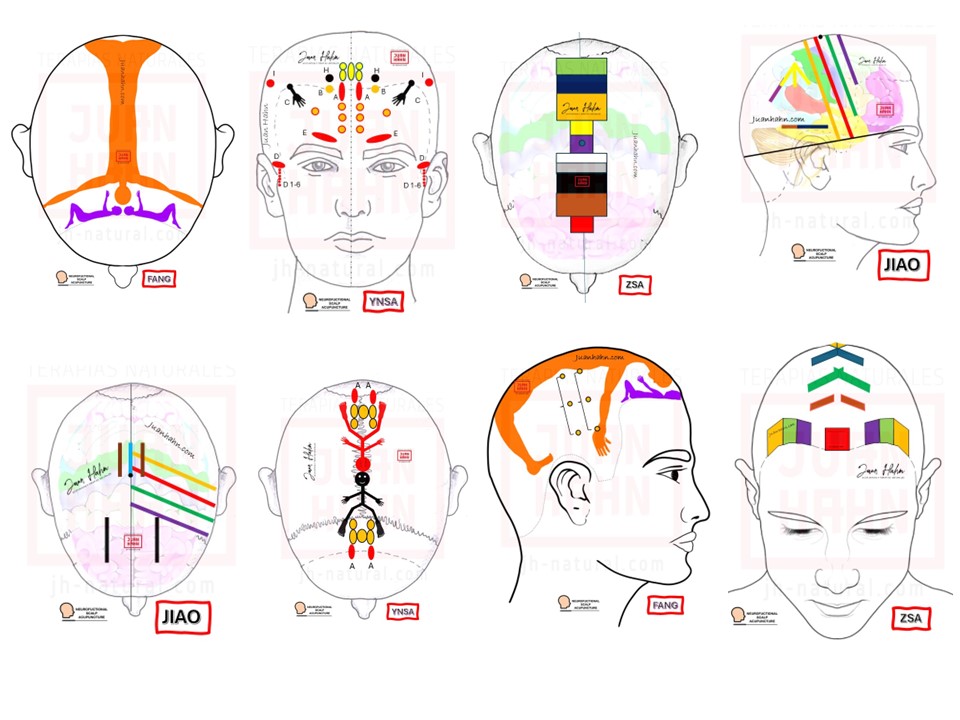
In YNSA, there are various diagnostic areas, therapeutic areas, and therapeutic-diagnostic areas throughout the body, not just on the head.
The system is highly effective in treating both acute and chronic pain, as well as many neurological disorders. Additionally, it has proven to be very effective in a wide range of other pathologies.
Scalp Mapping
Basic points, sensory points, brain points, “Y” points, cranial nerve points, “I” somatotope, “J” and “K” somatotope, other somatotopes, extraordinary points, tinnitus, diagnosis through the neck, abdomen, or arm.
In 2017, I had the honor of traveling to Japan to learn directly from Dr. Yamamoto, the creator of YNSA. This encounter was a highlight in my career and a profound source of inspiration. It was a true gift to study with such a respected master and absorb his wisdom.
Unlike other scalp acupuncture techniques, YNSA has its own diagnostic tools, which means it can treat not only symptoms but also underlying causes of certain problems.
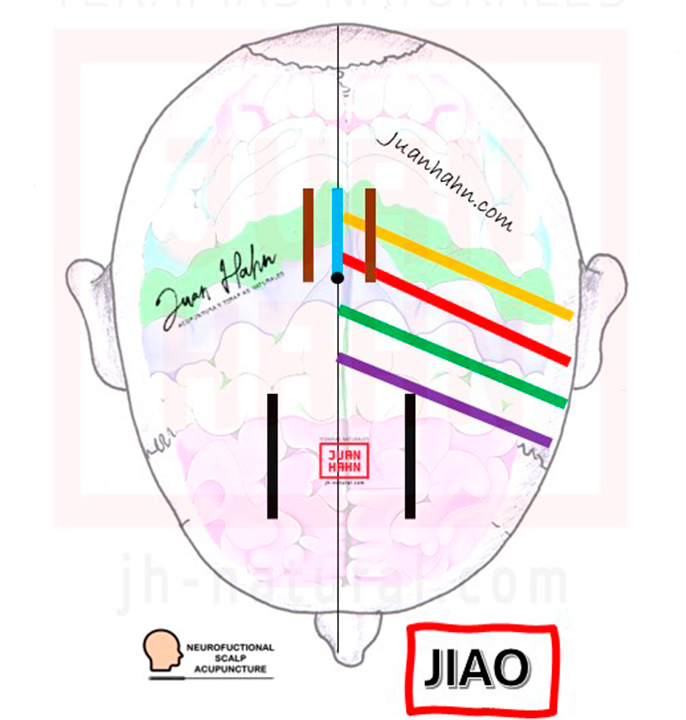
Jiao Shunfa Scalp Acupuncture
Dr. Jiao Shunfa developed his system based on the idea of reflex zones on the scalp that correspond to different parts of the body. Jiao targeted areas of the cerebral cortex that correspond to motor and sensory functions, as well as areas related to balance and vision.
With a strong foundation in modern medicine and extensive clinical experience, Dr. Shunfa tested scalp acupuncture on himself to create his unique vision and style. He published his system on March 18, 1971.
Jiao Shunfa is considered the founder of modern Chinese scalp acupuncture.

Scalp Mapping
Motor area, sensory area, chorea-tremor control area, vasomotor area, foot sensory-motor area (FSMA), dizziness and auditory area, first speech area, second speech area, third speech area, application area, visual area, balance area, mania control area, emotion area, central area, head or nose-throat- mouth-tongue area, stomach area, liver and gallbladder area, thorax area, reproductive system area, intestine area.
Clinical applications generally focus on treating neurological pathologies, although the scope of application is much broader.
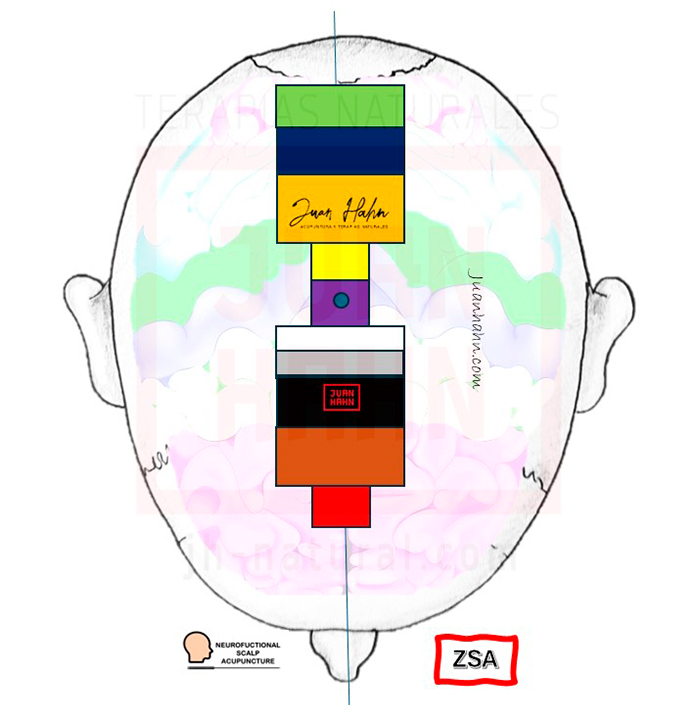
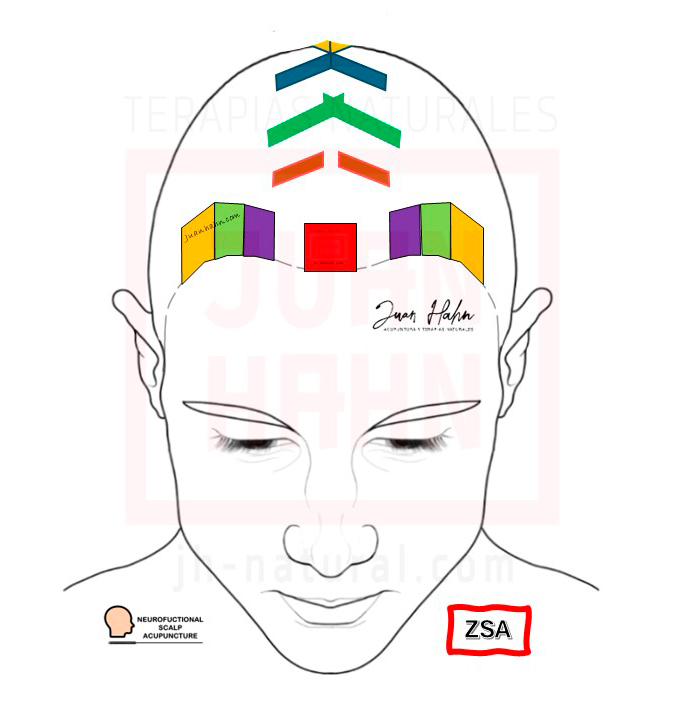
Ming Qing Zhu Scalp Acupuncture (ZSA))
Dr. Ming Qing Zhu combined traditional Chinese acupuncture with modern neurology to create his scalp acupuncture system.
Zhu’s scalp acupuncture is based on TCM, the Yin-Yang theory, the theory of the five elements, the meridians, the Zang-Fu, the Qi and Xue, as well as Western neuroanatomical and neurophysiological knowledge.
Scalp Mapping
Head area, face area, upper Jiao area, middle Jiao area, lower Jiao area, perineum and foot area, cervical area, thoracic area, lumbar area, sacral area, shoulder area, hip area, upper limbs area, lower limbs area, upper abdomen area, lower abdomen area, frontotemporal area, occipitotemporal area, occipital area.
Fang Yunpeng Scalp Acupuncture
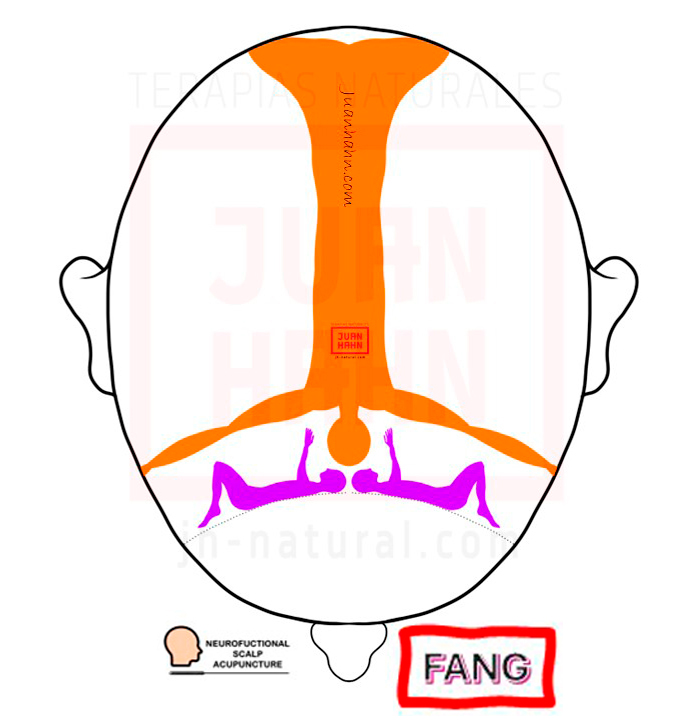
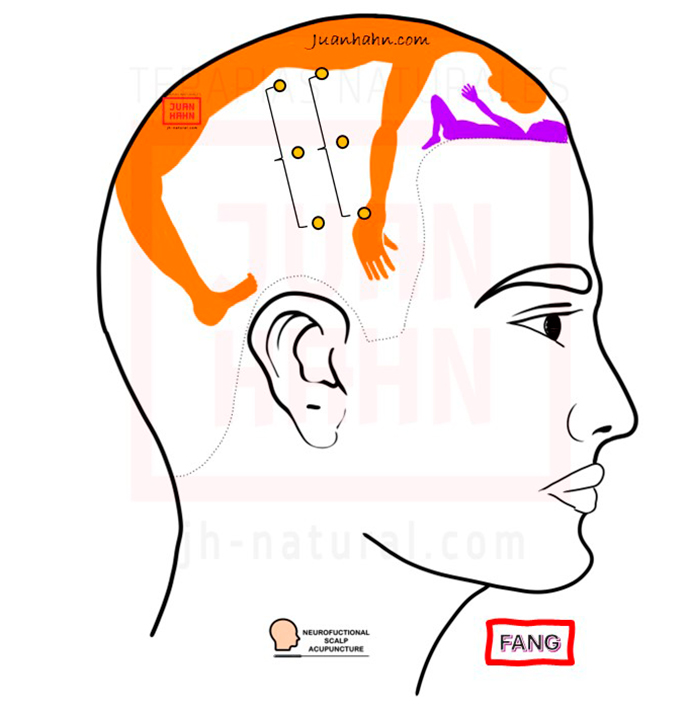
Dr. Fang Yunpeng’s technique integrates traditional Chinese medicine and modern neuroscience.
Fang served as an army surgeon during World War II, developing effective acupuncture methods for relieving postoperative pain.
In Fang’s scalp acupuncture, we find a large image in the prone position. Above the hairline, there are two symmetrical microsystems.
Lin Xue-Jian Scalp Acupuncture
Dr. Lin wrote extensively about scalp acupuncture during her long and productive life.
She was a professor and director of biological research at a medical school in Shanghai and the department head of a Shanghai hospital.
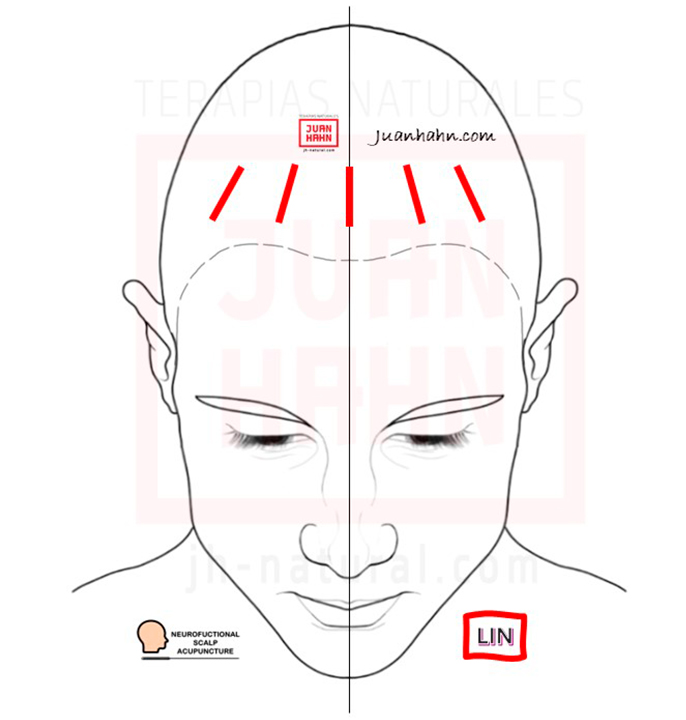
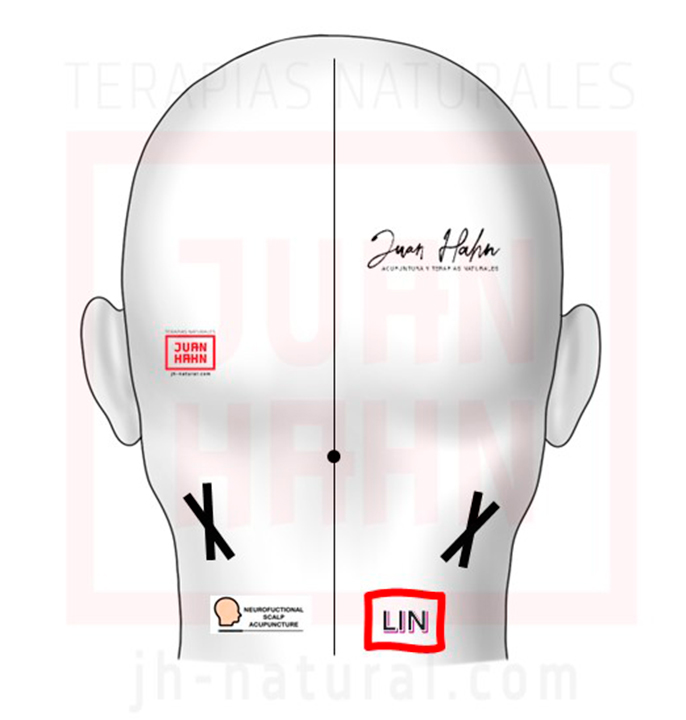
Her work is influenced by Jiao’s scalp acupuncture, although she has made her own interesting contributions – for example, her ideas related to the cerebellum are particularly impressive.
Scalp Mapping
Premotor area, prefrontal cortex, supplementary motor area, temporal area, anxiety area, sound-memory area, speech formation area, visual association area, cerebellar vermis area, cerebellar hemispheres area.
Other Scalp Acupuncture Techniques
There are other scalp acupuncture methods, such as Karl Tai’s scalp acupuncture and Master Tung’s skull points, which should also be considered in a holistic scalp acupuncture treatment.
Impact and Development of Modern Scalp Acupuncture
Scalp acupuncture is gaining recognition and acceptance within the international community of acupuncturists, therapists, and healthcare professionals. The excellent clinical results seen in areas such as pain management, neurological rehabilitation, and the treatment of endocrine-metabolic, dermatological, emotional, and other pathologies have significantly contributed to its global expansion in recent years.
So, now there is more global acceptance and interest in scalp acupuncture, markedly enhancing its clinical applications and leading to its incorporation into public health systems in an increasing number of countries.
There is a growing international community working hard to improve patients’ quality of life with “kind” therapies that have minimal or no side effects. They promote high-quality training projects and the implementation of options like scalp acupuncture, which has proven to have a broad range of therapeutic possibilities.
The Importance of Research and Continuous Education
I am deeply aware of the possibilities of scalp acupuncture. Therefore, in recent years, I have led trainings in more than 20 countries across 4 continents, earning the trust of nearly 4,000 students. My goal is to ensure that professionals practicing this discipline stay up-to-date on the latest advancements and techniques in the field, via attending conferences and seminars, participating in training programs, and collaborating with other professionals on clinical and research projects.
The Importance of Synergies in Clinical Practice
In my clinical practice, I apply YNSA to various pathologies ranging from pain treatment to neurological, dermatological, endocrine, and emotional problems, as well as problem prevention in healthy individuals. This is not possible with traditional Chinese scalp acupuncture. Chinese scalp acupuncture addresses neurological, endocrine, gynecological-urinary, fertility, and digestive problems, among others.
The global future of scalp acupuncture revolves around the integration of different approaches and techniques into clinical practice. This will be achieved through the study, teaching, and clinical application of various systems incorporating current neuroanatomical, neurophysiological, and neuropathological advancements. The synergy of all these elements forms the discipline known today as Neurofunctional Scalp Acupuncture.
I propose a more comprehensive, effective, and holistic approach to patient treatment. The synergy between these techniques allows therapists to address a wide range of pathologies and provide personalized treatment tailored to each patient’s individual needs. By leveraging the strengths of each approach, practitioners can maximize therapeutic benefits and improve treatment outcomes.
The combination of different techniques requires a deep understanding of their origins, possibilities, indications, needling techniques, and stimulation methods. Proper knowledge and application of these techniques will undoubtedly benefit the patient, regardless of the reason for consultation, pathology, or imbalance.
My Life Project: Creating a Fusion of Different Scalp Acupuncture Techniques: I have named this project “Neurofunctional Scalp Acupuncture.”
My dedication to scalp acupuncture is a life project I hold near and dear to my heart: creating a fusion of different scalp acupuncture techniques, grounded in deep respect and admiration for their creators. For many years, my vision has been to combine the unique principles and approaches of Yamamoto, Jiao, Zhu, Fang, and Lin into a single clinical practice to offer patients a comprehensive and holistic approach to their health and well-being. This project is not only ambitious but also deeply meaningful. By honoring and respecting the individual contributions of each creator, I aim to build upon a legacy of wisdom and excellence in the field of scalp acupuncture. My commitment to integration and synergies reflects a profound understanding and respect for the complexity and richness of this acupuncture practice, which has already improved the quality of life for millions of patients around the world.
Conclusiones
Scalp acupuncture is a fascinating technique that offers unimaginable benefits for patients. The combination of different approaches, along with the dedication and experience of therapists who never neglect the importance of humility, compassion, and empathy in the healing process, can often provide rapid, comprehensive, and lasting improvement for our patients.
I hope we can continue to explore and learn in this field and harness its incredible potential.
Juan Hahn Hahn is an acupuncturist and manual therapist. Although trained in various natural therapies, he specializes in his own personal style of acupuncture that synergizes different techniques from classic acupuncture to cutting-edge modern practices.
He holds a nursing degree and has pursued postgraduate studies in Pain Management, Pre-Hospital Emergencies, Critical Care, Operating Room, and Resuscitation.
He has trained and worked in Spain, Germany, Switzerland, United Kingdom, Italy, Greece, Netherlands, Belgium, Romania, Morocco, Scotland, Portugal, Ireland, France, Mexico, Chile, Argentina, Peru, Colombia, Israel, Croatia, Philippines, China, India, Vietnam, Nepal, Thailand, and Japan.
He is the author of three books and co-author of three others. His book “YNSA Yamamoto New Scalp Acupuncture” has been published in Spanish, English, German, Portuguese, French, and Croatian, and has reached over 60 countries.
Sorry, the comment form is closed at this time.